

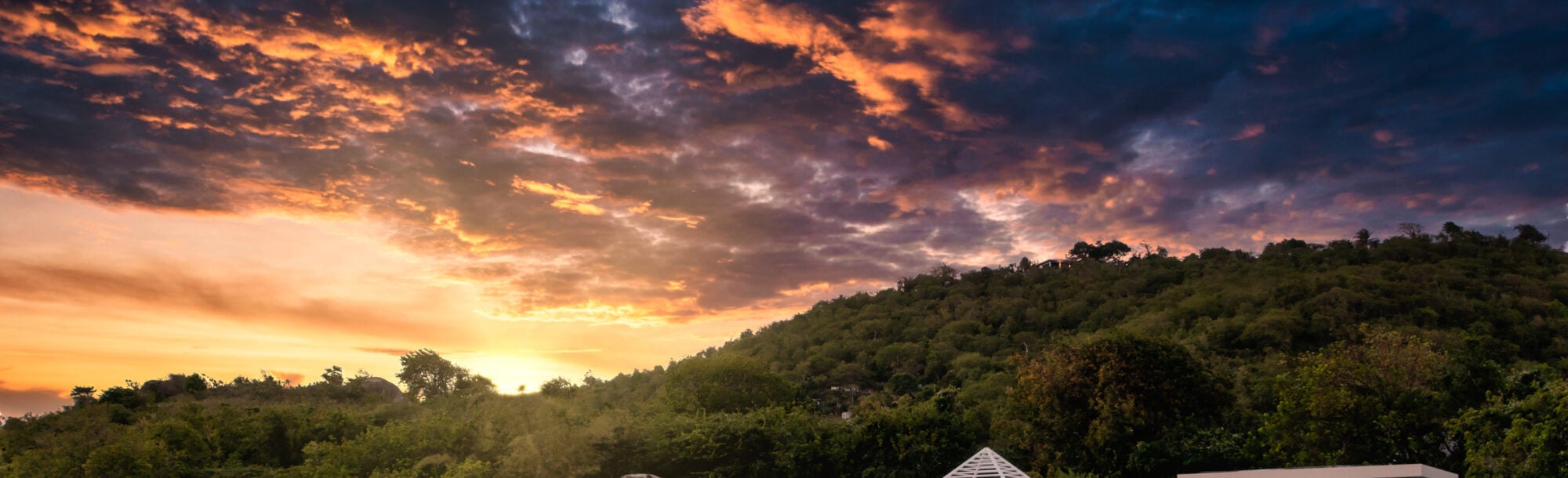
Weather in Vieques, Puerto Rico
Vieques Weather & Seasons: Sunshine, Passing Showers, and What the Forecast Really Means
You check the weather before your Vieques vacation, and there it is: a little rain cloud on almost every day of your trip.
Before you start rethinking your beach plans, take a breath. This is the tropics. A forecast that includes showers can still turn into a beautiful day with hours of sunshine, warm water, and a brief burst of rain that passes before you finish lunch.
On many days, rain falls somewhere on Vieques while another beach stays sunny. You might watch a shower move across the water, feel a few drops, and be back in bright sunshine a little later. Sometimes the rain arrives overnight, and your first clue is a wet patio in the morning.
That does not mean it rains everywhere every day, or that every shower is brief. We have genuinely rainy days, too. But a row of rain icons is not a reliable picture of what your vacation will look like.
Why Does the Forecast Say Rain Every Day?
Vieques has a tropical marine climate. Warm ocean water supplies moisture, and the prevailing trade winds carry patches of clouds and showers through the region.
A weather app has to summarize all of that in one small daily symbol. If showers are possible during part of the forecast period, you may see a rain cloud even when much of the day is dry.
A perfectly enjoyable island day might include sunshine over breakfast, a passing shower while you are getting ready, several hours at the beach, and another shower after dinner.
The useful question is not simply, “Will it rain?” It is, “How much rain is expected, when might it arrive, and is this a passing-shower pattern or a larger weather system?”
What Does a 60% Chance of Rain Mean?
In a National Weather Service forecast, it means a 60% chance of measurable rain at your location during the stated forecast period.
It does not mean it will rain for 60% of the day. It also does not automatically mean 60% of Vieques will get rain, or that rain is guaranteed somewhere on the island.
Even a very high rain probability does not tell you how long the rain will last. Check the hourly forecast, expected rainfall amounts, and written forecast alongside the percentage.
What Is a Typical Day of Weather Like?
There is no single schedule that Vieques follows every day. Showers can arrive in the morning, afternoon, evening, or overnight.
During a typical passing-shower pattern, you may notice:
- Bright sunshine interrupted by clouds moving through.
- A brief shower followed by clearing skies.
- Rain over one part of the island while another stays dry.
- Dark clouds offshore that never reach your beach.
- A warm breeze that makes shaded spots feel more comfortable.
Some showers last only a few minutes. Others linger or arrive in repeated rounds. Avoid building your plans around the idea that tropical rain always ends in ten minutes.
Morning can be a wonderful time to get outside, especially before the hottest part of the day, but “it only rains in the afternoon” is not a dependable rule here.
Vieques Weather Throughout the Year
Vieques stays warm year-round. The seasonal differences are more about humidity, breeze, rainfall, and ocean conditions than dramatic changes in temperature.
As a broad packing guide, think daytime temperatures in the low to middle 80s°F during the cooler months and upper 80s°F to around 90°F during the hotter months. Nights generally stay warm, often in the 70s°F. These are approximate expectations, not monthly station averages or limits; humidity and direct sun can make it feel considerably hotter.
December–March: Generally Drier and More Comfortable
Winter and early spring are popular for good reason. The weather generally feels less humid than late summer, and breezy days make outdoor meals, beach visits, and exploring especially enjoyable.
Passing showers still happen. A December or February forecast with rain in it is not unusual, and occasional fronts or other weather patterns can bring a wetter stretch.
Winter sunshine also does not guarantee calm swimming conditions. Swells generated far away can reach the island even when the local sky looks beautiful.
April–May: Warmer Days and a Gradual Transition
Days become warmer, and humidity tends to increase as spring progresses. Rainfall can pick up, although the timing and intensity vary from year to year.
This can still be a lovely time for beach days and outdoor adventures. Build in some flexibility and look at the actual forecast rather than assuming a calendar month determines your weather.
June–July: Hot, Bright, and Humid
Early and midsummer bring strong sunshine, warm nights, and plenty of heat. Showers remain part of the picture, and the broader region sometimes experiences a relative dip in rainfall between spring rains and the wetter late summer and fall.
A midsummer lull is a climate tendency, not a guarantee. Tropical waves can still bring wetter weather.
Plan shade breaks, carry water, and consider accommodations with air-conditioning if sleeping in warm, humid conditions is uncomfortable for you.
August–October: Wetter Patterns and Tropical Weather Awareness
Late summer into fall is generally among the wetter parts of the year on Vieques. Showers can be heavier or more frequent, and tropical disturbances can bring several unsettled days.
There are also beautiful, sunny days during these months. “Rainy season” does not mean continuous rain. It means allowing more room for weather changes and paying closer attention to tropical forecasts.
For travel during this period, flexibility matters more than trying to find a long-range forecast that promises a completely dry week.
November: A Transition Toward the Drier Season
November can bring a mixture of sunshine, passing showers, and lingering wet-season weather. Some stretches feel distinctly more comfortable; others remain humid and rainy.
The Atlantic hurricane season continues through November 30. Keep checking conditions as your trip approaches rather than assuming tropical weather concerns end with October.
Is There a Rainy Season in Vieques?
Yes, but it is more useful to think in terms of generally drier and wetter periods than a strict switch between two seasons.
Winter into early spring is usually drier. Late summer and fall are generally wetter, especially August through November. Spring rainfall and a possible midsummer lull add some variation between those broad patterns.
Published descriptions of Vieques use different boundaries for the dry season, depending on the location, records, and definition being used. For visitors, the practical point is straightforward: rain is possible in every month, and sunshine is possible during the wetter months.
Rainfall also varies across Vieques. Long-term descriptions generally show more rain in the western part of the island than farther east. That is a background climate pattern, not a promise that driving east will find you a sunny beach today.
How to Read the Forecast Before Your Trip
Start With Vieques, Not San Juan
Make sure your app is showing Vieques, Puerto Rico. Conditions at the San Juan airport or in the mountains of the main island may be quite different from conditions here.
Read Beyond the Daily Icon
Check:
- Timing: Are showers expected overnight, during the morning, or throughout the day?
- Amount: Is the forecast calling for a small amount of rain or substantial accumulation?
- Pattern: Does the written forecast describe isolated showers, repeated rounds of rain, or widespread heavy rainfall?
- Wind and seas: Could conditions affect swimming, snorkeling, or boat trips?
- Alerts: Are there flood, thunderstorm, marine, or tropical weather concerns?
A high chance of a brief shower and a forecast for prolonged heavy rain deserve different plans.
Use the Hourly Forecast With Some Flexibility
The hourly view is more useful than a single daily symbol, but it cannot promise the exact minute a small tropical shower will reach your beach.
Use it to identify likely windows for outdoor activities, then check conditions again before heading out.
Look at Radar Close to Your Activity
Radar can help you see whether a small patch of showers is moving through or a broader area of rain is approaching. Use the moving loop to understand the pattern.
Radar works best alongside the forecast and official alerts. A gap between showers is not a reason to ignore a warning.
Avoid Judging Your Entire Trip Too Far Ahead
A forecast a week or more away can give a general sense of conditions. It is less useful for deciding whether a particular beach will be sunny at a specific hour.
Keep your plans flexible, then refine them as your travel dates get closer.
Does Rain Ruin a Beach Day?
Often, no. A passing shower may simply mean taking a break and returning when it clears.
Sometimes rain does change the plan. Repeated downpours, thunderstorms, or widespread unsettled weather can make a beach day impractical.
There is also a difference between rain and dangerous water conditions. A sunny beach can have strong currents or rough surf. A cloudy beach can look calm. Check both the sky and the sea.
If you hear thunder, leave the water and seek shelter in a substantial enclosed building or a fully enclosed vehicle. A palm tree, beach umbrella, or open picnic shelter is not safe lightning shelter. Wait at least 30 minutes after the last thunder before resuming outdoor activities.
Snorkeling Conditions After Rain
A sunny sky does not automatically mean clear snorkeling water.
After heavy rain, runoff can carry sediment into the sea, especially near drainage outlets and affected shorelines. Waves and wind can also stir up sand and reduce visibility.
If the water looks brown, unusually cloudy, or affected by runoff, choose another activity and ask your operator about conditions. Allowing time for the weather to clear does not guarantee the water has cleared, too.
A sheltered beach may be a better option on a windy day, but there is no beach that is always calm or always clear. Choose based on current conditions.
How Weather Affects Bio Bay Tours
A rain icon alone is not a reason to assume your Bio Bay tour will be canceled. Light rain and dangerous weather are different situations.
Operators make decisions based on actual conditions, including lightning, wind, heavy rain, and safe access. Follow your operator’s guidance and confirm its weather and cancellation policy when you book.
Cloud cover can make the surroundings darker, but darkness alone does not determine the quality of the experience. Bay conditions and the organisms that produce the glow also matter. Avoid expecting a guaranteed level of brightness based on the weather forecast.
Book your tour early enough in your stay to leave some room for rescheduling if the operator needs to cancel and availability allows.
Hurricane Season in Vieques
The Atlantic hurricane season runs from June 1 through November 30. Historically, basin-wide activity is most concentrated from mid-August through mid-October.
Those dates describe a season of increased potential, not a forecast that a storm will affect your trip.
A passing shower, a tropical wave, and an approaching tropical storm are different weather situations. If an organized system could affect Puerto Rico, follow the National Hurricane Center and National Weather Service San Juan, along with instructions from local authorities and your travel providers.
For hurricane-season travel:
- Review cancellation and weather policies before booking.
- Check what any travel insurance actually covers, including exclusions for known storms.
- Leave some flexibility around important travel connections.
- Keep accommodation and transportation contact details available.
- Take official advisories seriously when a system could affect the area.
Will Rain Affect the Ferry or Flights?
Ordinary passing rain does not automatically stop transportation. Strong winds, rough seas, thunderstorms, reduced visibility, and broader storm conditions can cause delays or cancellations.
Check directly with your ferry provider or airline when weather is unsettled. A forecast app cannot tell you whether a particular departure will operate.
Allow extra time around important connections, especially when leaving Vieques to catch a flight from the main island.
What to Pack for Vieques Weather
Keep your weather gear light and practical:
- Breathable clothing and swimsuits.
- A lightweight rain jacket or compact poncho.
- A dry bag or waterproof pouch for electronics.
- Sun protection, a hat, and sunglasses.
- A reusable water bottle.
- Shoes with traction for wet paths.
- Insect repellent.
- A light layer for breezy evenings and air-conditioned travel.
After heavy rain, unpaved roads may have puddles, mud, or damage, and walking trails can become slippery. Do not drive through floodwater or assume a rental vehicle makes every route passable.
Frequently Asked Questions
The forecast shows rain every day of my vacation. Should I be worried?
Not from the icons alone. Daily shower chances are common in a tropical climate, and many days still have generous stretches of sunshine. Read the forecast details to see whether you are looking at passing showers or a more persistent wet pattern.
Does it actually rain every day in Vieques?
No. Some days stay dry, some have brief showers, and others are genuinely rainy. Rain can also fall over one part of the island while another stays sunny.
Does an 80% chance of rain mean the day will be a washout?
No. It describes the likelihood of measurable rain during the forecast period, not how long it will last or how heavy it will be. Check timing and expected amounts.
What is the best time to visit for drier weather?
Winter into early spring generally offers drier, more comfortable conditions. No month guarantees a rain-free trip.
Is summer too hot to enjoy Vieques?
Summer is hot and humid, but you can plan around the heat with early outings, shade, water, and breaks during the hottest hours. Consider your own comfort with humid weather when choosing accommodations and activities.
Are mornings always sunny?
No. Morning can be a lovely time to explore, but showers can arrive at any hour. Check the day’s actual pattern.
Can it rain all day?
Yes. Tropical waves, fronts, troughs, and organized systems can bring prolonged rain. Passing showers are common, but they are not the only weather Vieques experiences.
Should I cancel a tour because my app shows rain?
Contact your operator before changing your plans. Operators assess local conditions and decide whether an activity can run safely. Canceling on your own may be treated differently from an operator weather cancellation.
Is a rainy day a good day to go snorkeling?
Rain alone does not answer that question. Wind, swell, lightning, runoff, and water clarity matter. Ask your operator and check current marine conditions.
Can I just drive to the other side of the island to escape the rain?
Sometimes a nearby beach has different weather, but there is no guarantee. Check radar and road conditions before relocating. Driving around is not a solution to widespread storms or weather warnings.
What should we do if it really is a rainy day?
Slow down and leave room for a long lunch, a book, or a relaxed afternoon at your accommodation. Check current hours before heading to an indoor attraction or restaurant. When the weather clears, you can reassess outdoor plans.
Where should I check the weather?
Use the National Weather Service San Juan for forecasts and local alerts, its marine information for wind and sea conditions, and the National Hurricane Center for tropical systems. Your tour operator, airline, and ferry provider are the best sources for decisions about their own departures.
Useful Weather Resources
- National Weather Service San Juan
- Puerto Rico and U.S. Virgin Islands Radar
- National Hurricane Center
Editorial Sources
- NOAA: Ecological Characterization of the Marine Resources of Vieques — tropical marine climate, seasonal patterns, and geographic variation.
- USGS: Climate of Puerto Rico — trade winds, local variation, and rain-producing weather systems.
- Puerto Rico and U.S. Virgin Islands State Climate Summary — regional rainfall seasonality and midsummer variation.
- NWS: What Does Probability of Precipitation Mean? — rain probabilities and their limitations.
- NHC: Tropical Cyclone Climatology — hurricane season and historical activity.
- NWS: Lightning Tips — shelter and waiting guidance.
Seasonal descriptions are general planning guidance. The approximate temperature ranges above are not a table of measured monthly climate normals.