

Car Rentals in Vieques Island, Puerto Rico
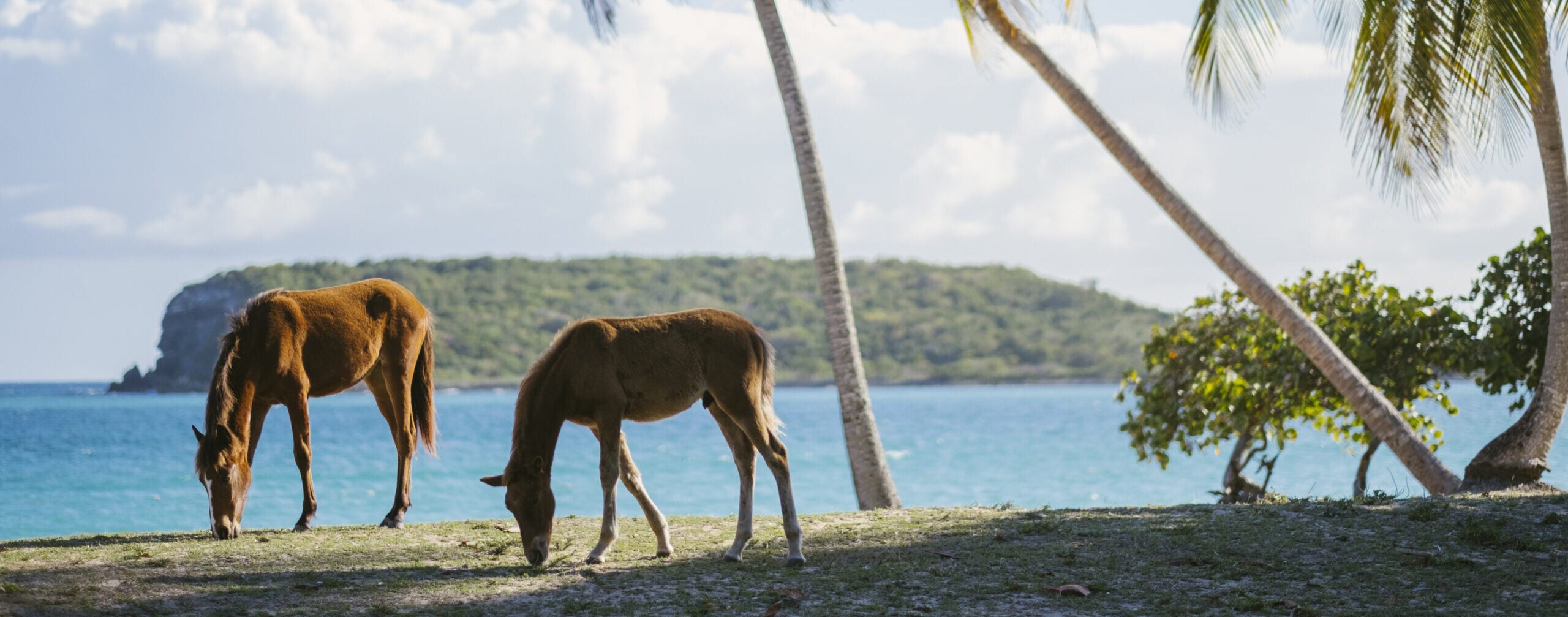
Rent a vehicle. Take your time. Watch for horses.
Driving a rental vehicle is our recommended way to get around Vieques. Having your own transportation gives you the freedom to explore beaches, stop for lunch, pick up groceries, and head out to dinner without arranging a ride for every trip.
Quick answers
- Best way around
- Rent a vehicle. Taxis and públicos exist, but waits can be long and the cost adds up.
- Uber
- Not on Vieques
- Book ahead
- Yes, especially for holidays and wedding weekends
- Do I need 4WD?
- Not for every drive. Higher clearance and four-wheel drive help on rough beach roads, especially after rain.
- Roads
- Main roads are paved but have potholes and tight curves. Beach roads can be gravel or dirt.
- Animals
- Horses roam the roads. Slow down early and give them room.
- Gas
- Stations are limited. Fill up around half a tank.
- Parking
- Avoid yellow curbs in Isabel Segunda. In Esperanza, keep boat ramps clear and do not park along the Malecón.
Company details, road conditions and fuel supply change. Confirm with your rental company.
Can you use Uber or taxis?
Vieques does not have Uber. Taxis and públicos are available, but wait times can be long, and multiple rides can get expensive—especially for families or groups. We’ve seen visitors spend more on taxis in a single day than they would have spent renting a car.
A público is a shared passenger van or car that operates as a local transportation service. You may ride with other passengers making different stops, and fares are generally charged per person. It can be useful for getting between the ferry, airport, and towns, but it doesn’t offer the same flexibility as having your own vehicle. Confirm the fare, destination, and pickup arrangements directly with your driver.
If you plan to rely on taxis or públicos, arrange your return ride before being dropped off, particularly at a beach or somewhere more remote.
Where to rent a vehicle
The main rental companies to check include:
- Maritza’s Car Rental — Offers regular cars, SUVs, and vehicles such as Jeep Wranglers and Ford Broncos.
- Vieques Car Rental — Offers car, Jeep, and SUV rental options.
- Coquí Car Rental — Offers Jeep rentals for exploring the island.
- Island Jeep Rental — Listed under Coquí Car & Island Jeep Rental; check directly for availability and pickup arrangements.
Reserve your vehicle early, particularly for holidays and wedding weekends. Before booking, confirm passenger and luggage capacity, pickup and return arrangements, and whether your arrival time works with the company’s operating hours.
Roads and choosing a vehicle
What are the roads like?
The main roads connecting the airport, Isabel Segunda, and Esperanza are paved, but expect potholes, narrow stretches, sharp curves, and occasional unexpected bumps. Some roads through the hills feel like one lane even though traffic travels in both directions. Take blind corners slowly and leave room for approaching vehicles.
Beach access roads can be a different story. Depending on where you’re headed, you may encounter gravel, dirt, uneven surfaces, and rough patches. Allow extra time for exploring, and ask your rental company about current conditions before setting off.
Do you really need four-wheel drive?
You don’t need 4WD for every drive on Vieques. A regular car can work well for getting between towns, restaurants, and many beach destinations. A vehicle with higher clearance and four-wheel drive becomes more useful on rougher access roads, particularly when rain leaves mud or deep ruts. Your plans—and the condition of the roads during your visit—should guide your choice.
Ground clearance matters, too: four-wheel drive helps with traction, but it won’t prevent the underside of a low vehicle from scraping an uneven road.
Before booking, describe where you’re staying and which beaches you hope to visit. Your rental company can recommend an appropriate vehicle and explain any restricted roads. Even with a Jeep, stay on permitted, maintained routes. Avoid driving onto beach sand or through standing water when you can’t judge its depth.
Road hazards: horses, animals and golf carts
Horses have their own schedule. Free-roaming horses are one of the most memorable parts of Vieques, and you’ll often see them beside or directly on the road. You may also encounter dogs, chickens, goats, or cattle, so keep your attention on what’s ahead.
Slow down well before approaching animals and stop if they’re blocking your path. Give them room to move, and pass slowly once the road is clear. A horse standing quietly on the shoulder can step into the road without warning.
Golf carts on the main roads create another hazard. They travel much more slowly than regular traffic, causing vehicles to catch up behind them. Repeated attempts to pass add risk on roads that are already narrow, winding, and sometimes difficult to see around.
If you’re driving behind a golf cart, leave plenty of space and wait for a clear, safe stretch before passing. Never pass on a blind curve or hill. If you’re considering renting a golf cart, keep these conditions in mind—especially if you plan to travel frequently between towns. For exploring the island, we recommend renting a regular vehicle.
After dark, take it especially slowly. Animals can be difficult to see until you’re close, and an unfamiliar curve or pothole is harder to judge at night.
Gas stations: fill up before you need to
Fuel stops are limited, and occasional supply interruptions or long lines can happen. We recommend filling up around half a tank, especially if you’re planning a full day of exploring. If you pass a station with a short line, it’s a good opportunity to stop.
Ask your rental company which station to use, what fuel your vehicle requires, and how much gas it needs when you return it. Build a fuel stop into your departure plans so you’re not rushing to fill up before your flight or ferry.
Parking in Vieques
Most villas and hotels have designated guest parking, and many of the larger restaurants have their own lots. In town, knowing where to park makes things easier for everyone.
Isabel Segunda
If you’re heading into Isabel Segunda to shop or enjoy a restaurant, plan on finding street parking. Watch for yellow curbs—parking there can get you a ticket. Leave driveways and entrances clear, and check for any posted restrictions.
If you receive a parking ticket, notify your rental agency so they can handle the next steps. Any fines or associated fees remain your responsibility.
Esperanza
The primary parking areas are the oceanfront lots across from El Blok and El Quenepo. Keep the boat ramps and their approaches clear. Local fishermen need room to launch, retrieve, and maneuver their boats and trailers, and a blocked ramp can quickly become a frustrating problem.
Please do not park along either side of the street bordering the Malecón. Stopped and parked vehicles create congestion and reduce visibility in an area with heavy pedestrian traffic.
Other places to look for parking include:
- Behind Duffy’s, which has a small parking lot for customers.
- In front of the museum, where there are approximately six spaces.
- Along nearby side streets, wherever parking is permitted and you can leave driveways and entrances clear.
- Along the main road approaching El Blok, before the turn onto the Malecón, on the side bordering the vegetation, where there is enough room to pull completely off the travel lane and no posted restriction.
Wherever you park, leave enough room for traffic to pass and pedestrians to walk safely. A few extra steps are worth keeping the waterfront clear.
Our best advice
Give yourself a little more time than the map suggests. Drive slowly, leave space for other vehicles, and let the horses finish crossing. You’re on Vieques—getting there is part of the day.
Driving and getting around Vieques: FAQs
Renting a vehicle
Do I need to rent a car in Vieques?
We strongly recommend it. Having your own vehicle makes it much easier to explore beaches, pick up groceries, and head out to dinner. You’ll have more flexibility and won’t need to arrange transportation for every outing.
Does Vieques have Uber?
No, Vieques does not have Uber. Plan on renting a vehicle or arranging rides with local taxis and públicos.
Can I get around using taxis instead?
Yes, but wait times can be long, and the cost of multiple trips adds up quickly. We’ve seen visitors spend more on taxis in one day than they would have spent on a rental car. If you’re relying on taxis, arrange your return ride before being dropped off—especially at a beach or somewhere remote.
What is a público?
A público is a passenger van or car that provides local transportation, often shared with other riders. Fares are generally charged per person, and your driver may make several stops. Confirm the price, destination, and pickup arrangements before your ride.
Which rental companies should I check?
Start with these local options:
Coquí and Island Jeep are listed together, so check directly when comparing availability.
How far in advance should I reserve my rental vehicle?
Book as soon as your travel dates are confirmed, particularly for holidays and wedding weekends. Vehicle availability is limited on a small island, so we recommend making transportation arrangements early.
What should I confirm before booking a rental?
Check passenger and luggage capacity, pickup and return locations, operating hours, and arrangements for your arrival time. Tell the company where you’re staying and which beaches you hope to visit so they can recommend a suitable vehicle.
Can I pick up my rental at the airport or ferry?
Pickup arrangements vary by company. Confirm whether they offer a shuttle, meet arriving passengers, or require you to arrange transportation to their office.
Vehicles and roads
Do I need a Jeep or four-wheel drive?
Not for every trip. A regular car can work well for driving between towns, restaurants, and many beach destinations. Higher clearance and four-wheel drive become more useful on rough access roads, particularly after rain. Ask your rental company what makes sense for your plans and accommodations.
Is ground clearance different from four-wheel drive?
Yes. Ground clearance is the space between the underside of your vehicle and the road. Four-wheel drive helps with traction, while higher clearance helps you navigate uneven surfaces without scraping underneath. A vehicle can have one without the other.
What are the roads like in Vieques?
The main roads are paved, but expect potholes, narrow stretches, sharp curves, and uneven surfaces. Some roads through the hills feel like one lane even though traffic travels in both directions. Drive slowly and leave room for approaching vehicles.
Are the roads to the beaches paved?
Not always. Beach access roads can include gravel, dirt, ruts, and rough patches. Conditions can change after rain, so ask your rental company about your planned destinations before heading out.
Can I drive onto the beach with a Jeep?
Keep your vehicle on permitted roads and in designated parking areas. Renting a Jeep doesn’t mean you can drive onto beach sand or take any trail you find. Follow your rental company’s restrictions.
What should I do if a road is flooded or muddy?
Avoid standing water when you can’t judge its depth or see the road underneath. If a route looks questionable, turn around and contact your rental company for guidance. Four-wheel drive doesn’t make every road safe to travel.
Golf carts, horses and night driving
Are golf carts a good way to explore Vieques?
For exploring the island, we recommend a regular vehicle. Golf carts travel much more slowly than other traffic, which creates backups and repeated passing attempts on narrow, winding roads. Keep that in mind if you’re planning frequent trips between towns.
What should I do when I’m behind a golf cart?
Leave plenty of room and wait for a clear stretch with good visibility before passing. Never pass on a blind curve or hill, and don’t let pressure from vehicles behind you rush your decision.
Will I see horses on the roads?
Very likely! Free-roaming horses are part of everyday life on Vieques. You may find them grazing beside the road, crossing in groups, or standing directly in your path.
What should I do if horses are blocking the road?
Slow down early and stop at a comfortable distance. Give them time and space to move, then pass slowly once the road is clear. Even a horse standing quietly on the shoulder can step into traffic unexpectedly.
Are there other animals to watch for?
Yes. Dogs, chickens, goats, and cattle may also be beside or on the road. Stay attentive, particularly around curves and after dark.
Is driving at night difficult?
It requires extra care. Animals, potholes, and unfamiliar turns can be harder to see after dark. Reduce your speed and allow more time to get where you’re going.
Gas and fuel
Are there gas stations in Vieques?
Yes, but fuel stops are limited, and lines or occasional supply interruptions can happen. Ask your rental company which station is most convenient and what fuel your vehicle requires.
When should I fill up?
We recommend filling up around half a tank. If you pass a station with a short line, take the opportunity—especially before a full day of exploring.
Do I need to refill the tank before returning my rental?
Follow the fuel policy in your rental agreement. Confirm the required return level when you collect the vehicle, and leave time for a fuel stop before your flight or ferry.
Parking
Is parking available at hotels, villas, and restaurants?
Most villas and hotels have designated guest parking, and many larger restaurants have their own lots. Confirm parking arrangements with your accommodations before arrival.
Where should I park in Isabel Segunda?
Plan on finding street parking when visiting shops and restaurants in town. Keep driveways and entrances clear, check posted restrictions, and avoid yellow curbs.
Can I park along a yellow curb?
Avoid parking at yellow curbs—you may receive a ticket. Look for another space and check nearby signs before leaving your vehicle.
What should I do if I receive a parking ticket?
Notify your rental company and follow their instructions for handling it. Any fines or associated fees remain your responsibility.
Where should I park in Esperanza?
Start with the oceanfront parking lots across from El Blok and El Quenepo. Keep boat ramps and their approaches clear so local fishermen can launch and retrieve their boats.
Can I park along the Malecón?
Please do not park along either side of the street bordering the Malecón. Parked vehicles create congestion and reduce visibility in an area where many people are walking.
Is there parking behind Duffy’s?
Yes, Duffy’s has a small parking lot behind the restaurant for customers.
Is there parking near the museum?
There are approximately six spaces in front of the museum. Check any posted restrictions before parking.
Where else can I look for parking in Esperanza?
Look along nearby side streets where parking is permitted, keeping driveways and entrances clear. Another option is the vegetation side of the main road approaching El Blok, before the turn onto the Malecón, wherever there is enough room to pull completely off the travel lane and no posted restriction.
Can I park near a boat ramp if I leave the ramp itself open?
Keep the entire approach clear, too. Boats and trailers need room to turn, back up, and maneuver. A space that looks empty may be essential access for a fisherman returning to shore.
Best advice
What’s your best advice for driving in Vieques?
Give yourself extra time. Take curves slowly, watch for animals, fill up before you need to, and choose a proper parking space—even if it means walking a little farther.